Alt-Line Strategy — Where Higher Payouts Hide Higher Margins on NBA Props
 Available in US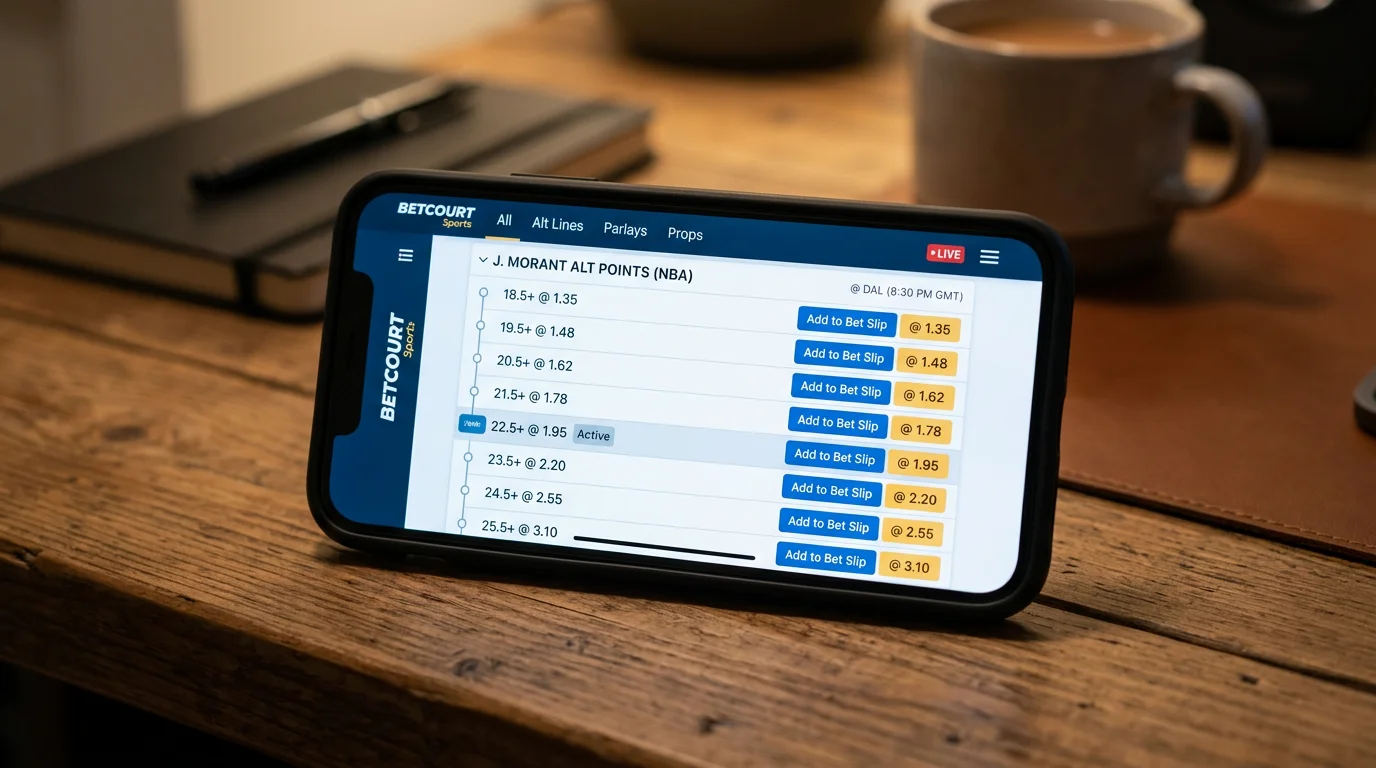
Alt lines are the most seductive part of any UK NBA prop menu and the most expensive for punters who do not know what they are looking at. The headline line carries an overround you can calculate. The alt line three steps above carries an overround you cannot see at a glance, and it is materially heavier than the headline. Punters who chase the bigger payouts on alt overs without understanding the cost end up subsidising the operator’s bottom line. Punters who use alts surgically — for specific matchups where the price is genuinely off — find some of the cleanest edges in the prop market.
The overround mechanic that nobody shows you
A balanced standard prop line at 1.91/1.91 carries a 4.76 per cent overround. That number is the operator’s margin on the market. Convert the alt prices to implied probabilities and the picture changes sharply. A points alt over at 30.5 priced 4.50 has an implied probability of 22.2 per cent. An under at the same line priced 1.20 has an implied probability of 83.3 per cent. The combined implied probability is 105.5 per cent. The overround is 5.5 per cent — slightly above the headline but not dramatically so.
The picture worsens as you climb the alt ladder. A points alt over at 35.5 priced 12.00 implies 8.3 per cent probability. The matched under at 1.05 implies 95.2 per cent. The combined implied probability is 103.5 per cent — overround of 3.5 per cent — but the asymmetry is the issue. The over carries 90 per cent of the overround, and the under carries 10 per cent. The over price has been shaved from where a balanced book would put it; the under price has been generously enhanced. The operator wants the over action because it is the high-margin side.
The same dynamic applies in reverse on alt unders. An alt under at low totals carries the heavy margin and the alt over at the same total is generously priced. Whether you are betting an alt over or an alt under, the question is which side of the line carries the operator’s margin. The answer depends on where the alt sits relative to the headline line. Above the headline, the over carries the margin. Below the headline, the under carries it. The asymmetry is consistent across operators.
When alts genuinely beat headline lines
The case for alt lines rests on specific situations where the matchup-specific probability differs sharply from the season-average probability that the operator’s model has produced. A player whose season-average probability of hitting 30 points is 18 per cent might have a matchup-specific probability of 28 per cent — a defence that has surrendered points to his role profile, against a back-up defender filling in for an injured starter, on a high-pace night. The alt over at 4.50 implies 22.2 per cent. Against a true probability of 28 per cent, the edge after overround is meaningful.
These spots come up perhaps thirty to fifty times per season for a punter doing the matchup work properly. Each one carries an edge in the 5 to 10 per cent range, which is well above operator overround on the alt line. The compounding effect across thirty bets sized appropriately is meaningful — meaningful enough to justify the research time, anyway. The challenge is the sample size. Thirty to fifty bets per season is too few to confirm or deny the edge in a single year. The variance in alt-line outcomes is wide enough that a year of solid edges can produce a flat or even slightly negative bottom line, and a year of marginal edges can produce a positive one.
This is the structural feature of the alt market that punters have to internalise. The expected value calculation might be positive, but the variance is wide enough that the result is dominated by luck across any single season. The discipline is to size correctly and to keep doing the same work even when a streak of bad outcomes makes the strategy look broken. It is not broken. Variance is wide.
The combination alt that hides the margin
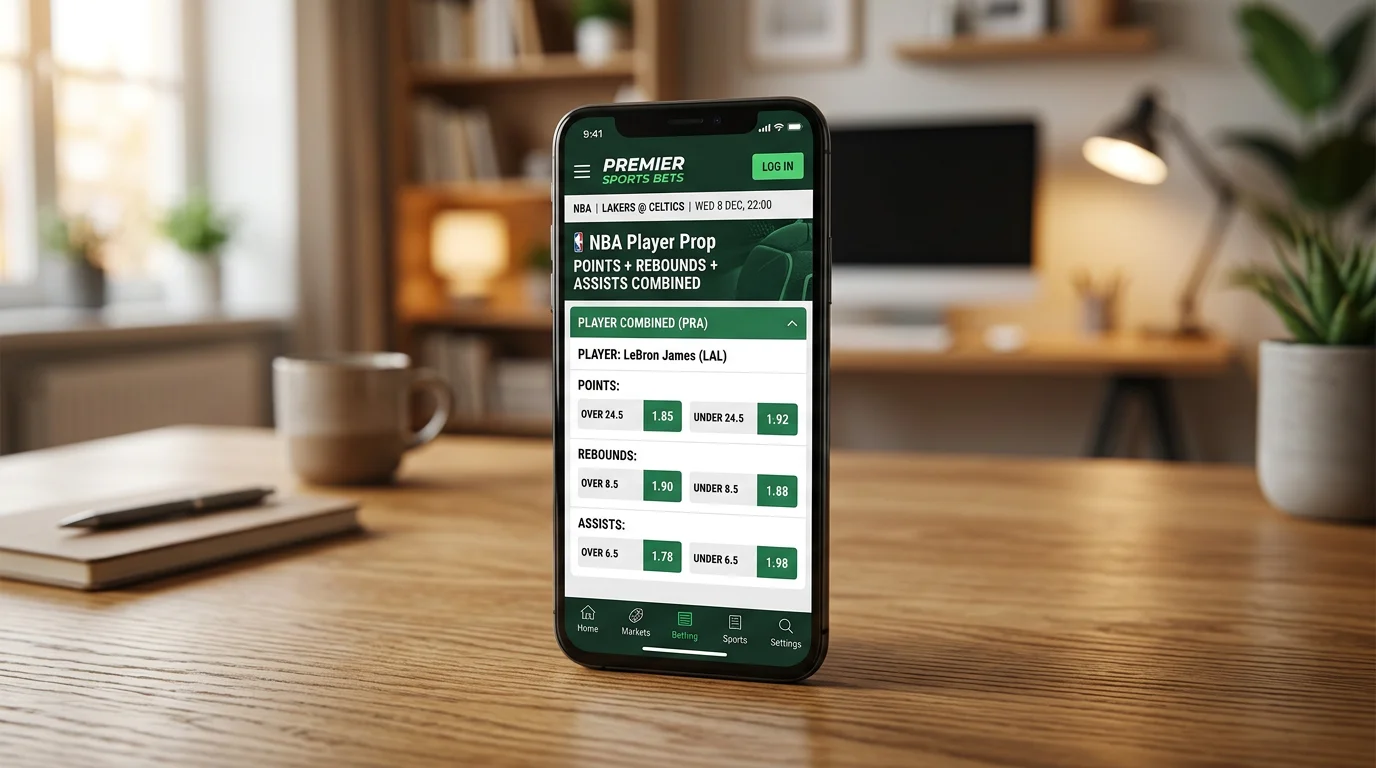
Combination alts — points-plus-rebounds-plus-assists at an alt total — carry the heaviest margins on the prop menu. The standard PRA line at 1.91/1.91 already carries margin slightly above the points-only equivalent because the variance of the combination is wider than the variance of the components. The PRA alt three steps above the standard line carries margin in the 12 to 18 per cent range, well above the 5 to 6 per cent on a standard alt single.
The mechanism that produces this heavy margin is the multi-stat correlation that operators model carefully but that punters often miss. A player’s points and assists are negatively correlated for high-usage point guards — when he scores more, he assists less, and vice versa. The PRA total is more stable than the individual components because of this negative correlation. Operators price the alt PRA accordingly, and the alt over carries a higher implied probability than a punter intuitively assumes from the headline numbers.
Where PRA alts pay is when the punter has an edge on one of the components and that edge translates into the combination. A point guard whose teammates are likely to shoot well on a given night has an elevated assist projection; if his scoring is also expected to hold steady, the PRA combination over has more probability mass than the operator’s correlation model assigns. These spots are rarer than single-component edges but they are valuable when they appear. The full PRA correlation framework explains the maths in more depth.
The same-game parlay overlap problem
Alts are the building blocks of same-game parlays, and the SGP construction creates an overlap problem that compounds the alt margin. A two-leg SGP combining an alt points over and an alt rebounds over for the same player layers two correlated probabilities into a single bet. The operator’s pricing model handles the correlation correctly — the price is not the simple multiplication of the two odds — but the embedded margin is heavier than the punter sees on the surface.
SGPs make up 60 per cent or more of basketball prop bets in some US states, and the UK market is rapidly catching up. Operators love SGPs for two reasons: the margin per bet is high, and the customer churn is low because the high-payout narrative keeps punters in the market even when individual bets lose. The customer experience is satisfying — small stake, big potential payout — and the operator’s expected value per pound staked is roughly twice what it would be on the equivalent singles.
For the punter, the SGP construction usually represents the worst expected value on any prop menu. Singles cost less margin. The high-payout potential of the SGP is not free; it is funded by the margin compounding. A punter who genuinely believes in two correlated outcomes is better off betting them as singles and accepting the lower combined payout, because the singles give back the margin overhead that the SGP eats.
Stake sizing for alt-line bets
Alt-line stake sizing has to account for the wider variance and the lower hit rate. A standard 1.91/1.91 prop bet that hits at 53 per cent is a clear value play, and stakes around 1 to 2 per cent of bankroll are appropriate. An alt at 4.50 odds that hits at 25 per cent — a 12 per cent edge over the implied probability — is a value play of similar mathematical strength, but the variance is wider. Stake sizing on these positions should be smaller in absolute terms, around 0.5 per cent of bankroll, to manage the wider variance even though the expected value calculation is similar.
The Kelly criterion provides a precise framework for this, and Kelly stakes on long-shot value bets are typically half or less of Kelly stakes on short-price value bets at the same edge percentage. The reason is that the variance of the outcome scales with the price; a 4.50-odds bet that hits 25 per cent of the time produces a much wider distribution of bankroll outcomes than a 1.91-odds bet that hits 55 per cent of the time, even when the expected value is identical.
Practical Kelly is rarely Kelly. Most disciplined punters bet quarter-Kelly or fractional-Kelly to manage drawdown risk, and on alt-line bets the fraction should be smaller than on headline-line bets. The reason is psychological as much as mathematical. A long losing streak on alt bets is normal and statistically expected, but it tests punter discipline severely, and oversized stakes during the streak compound the damage. Smaller stakes mean longer-term survival and better decision-making during inevitable drawdowns.
The reality of long-run alt punting
The alt market is beatable but the bar to beat it is high. The punters who profit from alts long-term build the same kind of probability framework they apply to headline lines, then scrutinise the alt prices specifically against that framework. The 250,000 unique prop markets posted across the NBA season include alt menus on most lines, and the mispriced alts are scattered through the season in ways that reward systematic research and punish casual punting.
The mistake that kills most alt-betting bankrolls is treating the alt as a fun bet rather than a value bet. A £10 alt at 8.00 odds returns £80 if it cashes. The retail attractiveness of that payout is enormous. The punter who bets it on intuition rather than calculation is paying a heavy tax that the operator collects regardless of whether the bet hits. Across hundreds of intuition-based alt bets per season, the tax compounds into a meaningful drag on the bankroll. Across hundreds of calculation-based alt bets at genuine edges, the same operator margin is overcome by the edges and the bankroll grows.
The framework that sustains this is the same framework that sustains profitability in any prop market: probability estimation, edge calculation, stake sizing and emotional discipline. The alt market amplifies all four because the variance is wider and the outcomes more volatile. Punters who treat alts as a separate species of bet that operates on different rules end up losing money. Punters who treat alts as variations of the same probability problem they solve for headline lines find their edges where they always have been — in the gap between the operator’s price and the true probability that careful research can identify.
Are alt-line bets worse value than headline-line bets on the same player?
On average yes, but the picture varies by where the alt sits. Alt overs above the headline line carry the heavy operator margin and alt unders below the headline line carry the heavy margin on that side. The compensation is that specific matchup situations sometimes produce a true probability that diverges from the season-average probability the operator’s model produced, and those divergences appear at alt prices more often than at headline prices.
Why do same-game parlays carry heavier margins than alt singles?
SGPs combine multiple correlated probabilities into a single bet, and operators price the correlation correctly but embed margin overhead at each step. The combined payout looks attractive but the implied probability is shaved compared to what a punter computes from the individual odds. SGPs make up 60 per cent or more of basketball prop bets in some markets because the customer experience is satisfying — but the operator’s expected value per pound staked on an SGP is roughly twice what it is on the equivalent singles.
How should I size alt-line bets compared to headline-line bets?
Alt-line stakes should be smaller in absolute terms even when the expected value calculation is similar to a headline-line bet, because the variance of long-shot outcomes is wider. Quarter-Kelly or fractional-Kelly sizing is appropriate for headline lines; the same fraction or smaller works for alts to manage drawdown risk during inevitable losing streaks.
Prepared by the nba Best Player Prop Bets editorial staff.