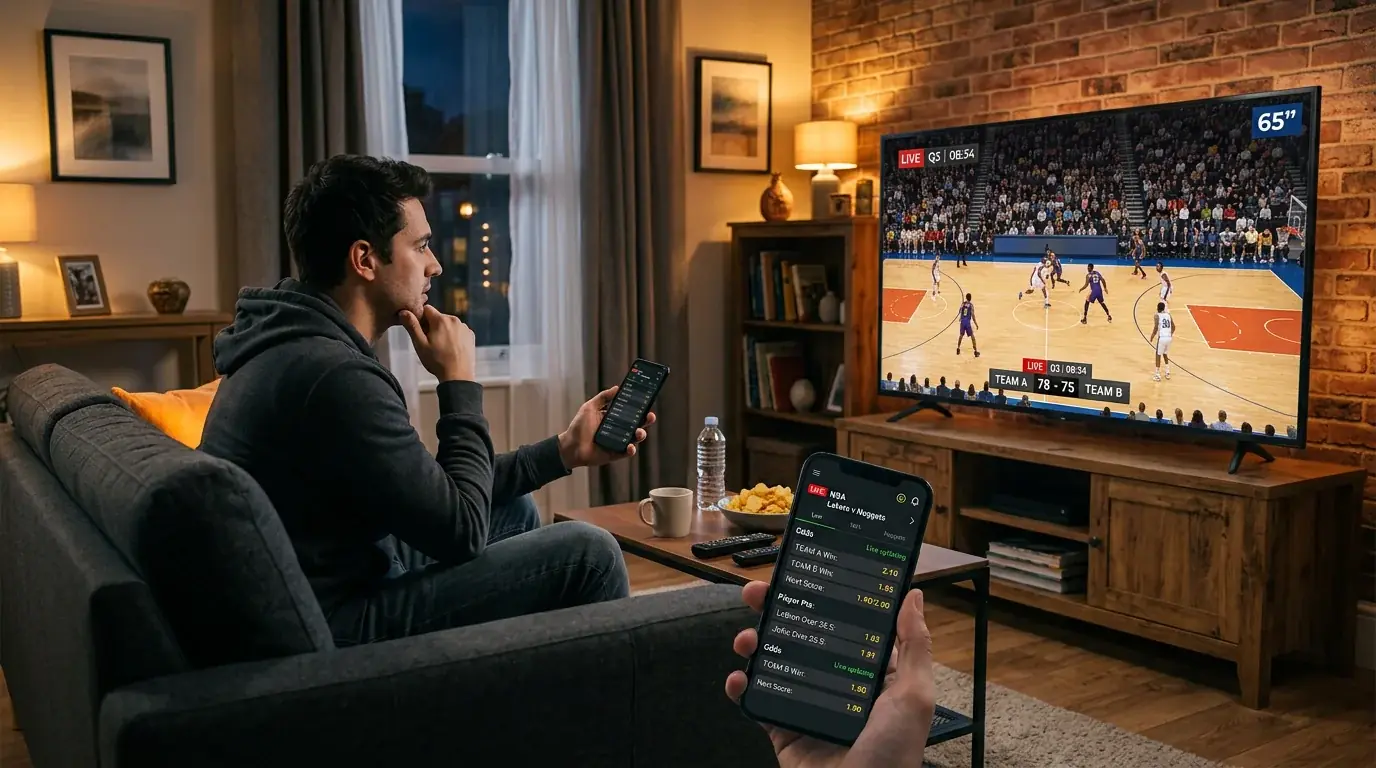
GAMSTOP and Self-Exclusion Tools for UK NBA Prop Bettors
 Available in US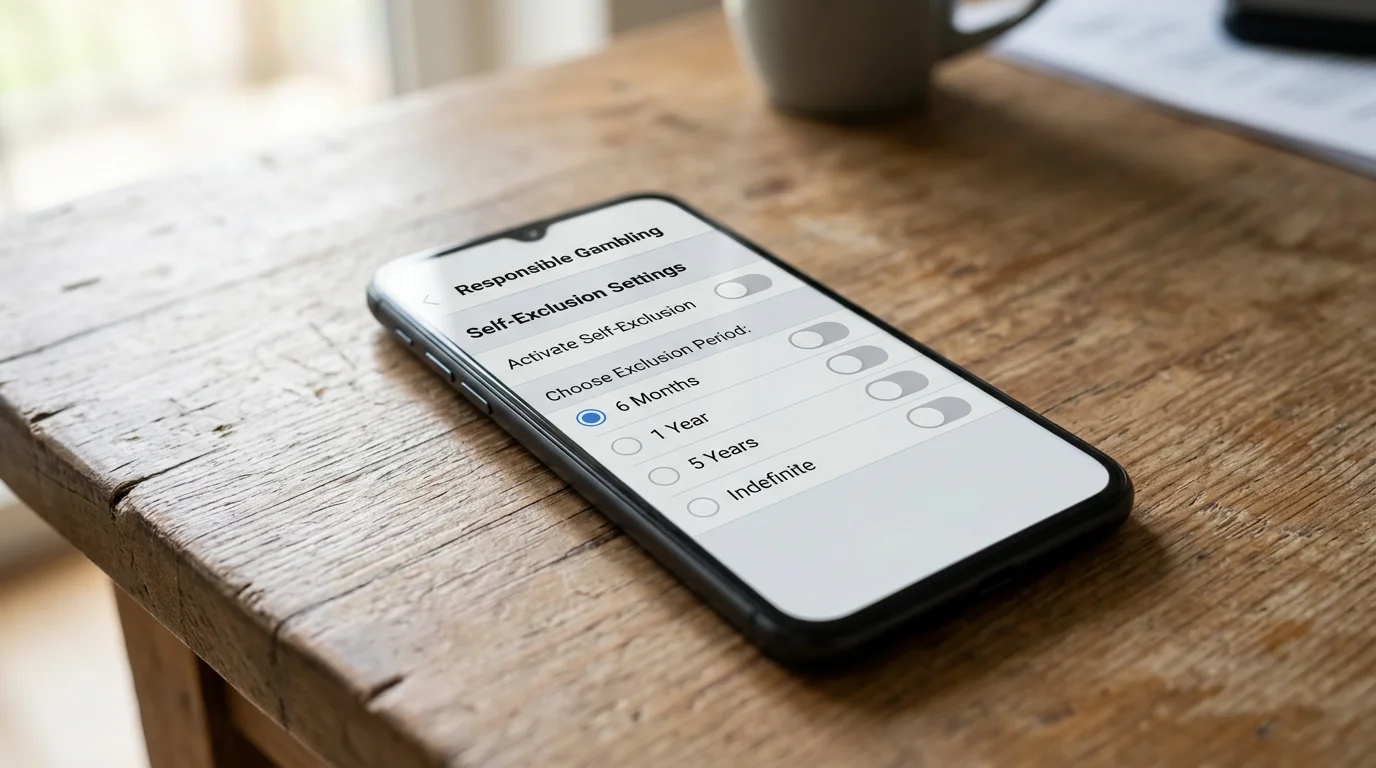
One of the better punters I’ve known used GAMSTOP for the first time at 39. He didn’t have a problem in the clinical sense. What he had was a January where late-night NBA props had crept from a Tuesday-and-Thursday habit into something he was opening at 2am most nights, on tilt from a cold streak, betting lines he wouldn’t have touched sober. Six months on GAMSTOP later, he came back with cleaner habits and a smaller bankroll for the right reasons.
That story matters because the conversation around self-exclusion is too often framed as a tool of last resort — something for people in crisis, not for people who simply want a structural off-switch. The reality is broader. The infrastructure is most powerful when used early and deliberately, not when things have gone badly wrong.
Table of Contents
- What GAMSTOP Actually Is and Why It Exists
- The Mechanics of Signing Up and What Happens After
- The Limits of What GAMSTOP Covers
- Operator-Side Tools and Why They Aren’t a Replacement
- Bank-Level Gambling Blocks
- When to Use Self-Exclusion Pre-emptively
- Resources Beyond Self-Exclusion
- Building Self-Exclusion Into Normal Practice
- The Quiet Strength of Available Friction
What GAMSTOP Actually Is and Why It Exists
GAMSTOP is a free, national self-exclusion scheme that covers every Gambling Commission-licensed online operator in Great Britain. You sign up once, choose a duration — six months, one year, or five years — and during that period no licensed online operator can knowingly accept your bets, open you a new account, or send you marketing. It’s been a condition of holding a UK remote operating licence since 2020 that operators participate. The Gambling Commission backs it with regulatory teeth, not commercial goodwill.
The scale of what it covers is the part most people don’t appreciate. The UK industry’s gambling yield was £16.8 billion for the financial year ending March 2025, with the remote casino, betting, and bingo segment accounting for £7.8 billion. Quarterly online GGY hit £1.42 billion in the second quarter of 2025-26, up 8% year-on-year. Every operator behind those figures is subject to GAMSTOP. When you self-exclude, you’re stepping back from a network that runs at multi-billion-pound monthly volume — not just one or two accounts.
This is also why GAMSTOP differs structurally from operator-side tools. An individual bookmaker’s self-exclusion only works for their accounts. GAMSTOP is the only mechanism that captures the whole UK-licensed surface in a single sign-up. For a punter who has accounts at four or five different sportsbooks, the difference is the difference between locking one door and locking the building.
The Mechanics of Signing Up and What Happens After
The sign-up itself is unremarkable. You provide name, date of birth, address, email, and the dates and addresses you’ve used for any betting accounts in the past few years. The scheme uses that information to match you across operators. Within 24 hours, registered books should have you flagged. From that point, attempts to log in to existing accounts will either fail or redirect you to a holding page with information on support services.
What people miss is what happens with money already in accounts. GAMSTOP doesn’t seize or freeze your funds. Operators are obliged to allow you to withdraw any balance you have at the point of self-exclusion, and most do so promptly. The exclusion is forward-looking — it stops new bets and new deposits, it doesn’t impound your existing position. You can self-exclude on a Sunday evening and have your withdrawals processed back to your bank within the operator’s normal timeframes.
The other detail that surprises people is what happens at the end of the exclusion period. The exclusion doesn’t just lapse. To resume betting at any UK-licensed operator, you have to actively contact GAMSTOP to begin the reactivation process, which includes a cooling-off window — currently 24 hours after you make the request. That structure is deliberate. The friction is the feature.
The Limits of What GAMSTOP Covers
GAMSTOP only covers Gambling Commission-licensed operators. That phrase does a lot of work. There’s a category of online sites — sometimes marketed as “non-GAMSTOP casinos” or “non-GAMSTOP bookmakers” — that operate under offshore licences and explicitly target UK customers who have self-excluded. These sites are not in any meaningful sense regulated for UK consumer protection.
I’m not going to walk anyone through the sign-up process for these operators, because the entire point of self-exclusion is to take that option off the table. But it’s worth being honest about the gap. Offshore sites can take your deposits, refuse to pay your winnings, and block accounts arbitrarily, with effectively no recourse via the UK regulator. The Gambling Commission has been increasingly vocal about the scale of this market and the harm it causes — particularly to people who have self-excluded for genuine reasons and then encounter offshore operators marketing aggressively at exactly that vulnerability.
The structural fix for this gap involves bank-level blocks, which I’ll come to. GAMSTOP does what it can within its remit; the rest is on you to construct.
Operator-Side Tools and Why They Aren’t a Replacement
Every UK-licensed sportsbook offers a suite of self-control tools at the account level. Deposit limits, loss limits, session-time limits, reality checks, time-outs of 24 hours to six weeks, and individual self-exclusion of six months to five years. These tools are useful, and I use most of them as standard practice — deposit caps in particular, which I covered in my piece on how UK punters should structure their NBA prop bankroll.
The limitation is that operator-side tools only work within one operator. If you set a £100 weekly deposit cap at one book and then open an account at another, the cap follows nobody. You can replicate the cap at the second book — and you should — but the discipline of doing so across four or five accounts requires you to remember and maintain it. That’s a cognitive burden that fails exactly when you most need it.
This is why I treat operator-side tools as primary discipline and GAMSTOP as a tier-two backstop. Day-to-day, deposit caps and session limits at each book do the work. If those start failing — if you find yourself increasing limits repeatedly, opening new accounts to circumvent caps at existing ones, or chasing losses across operators — that’s the trigger to escalate to GAMSTOP, not to keep tweaking individual settings.
Bank-Level Gambling Blocks
UK retail banks have rolled out gambling-transaction blocks across most major current accounts and credit cards over the last six years. Monzo, Starling, Barclays, HSBC, Lloyds, NatWest, Halifax, Santander — virtually every consumer-facing bank now offers either a self-imposed gambling block or a built-in option to refuse transactions to merchants categorised as gambling.
The mechanism uses MCC codes — the merchant category numbers card networks assign to retailers. Gambling operators sit under specific codes, and your bank’s block intercepts transactions to those codes before they reach the operator. The effect is that even if you’re logged in to a non-GAMSTOP offshore site, your card simply won’t fund the deposit.
Bank blocks differ in their friction. Some are toggle-on, toggle-off with no cooling period — useful but easy to defeat. The better implementations include a 48-hour cooling-off window before a block can be removed, which mirrors the philosophy behind GAMSTOP’s reactivation cooling-off. If your current bank doesn’t offer a meaningful cooling-off period, that’s worth weighing in your choice of bank, especially if you’re using gambling blocks as a serious self-control mechanism rather than a soft signal.
The combination of GAMSTOP plus bank-level gambling block is, in my view, the strongest practical configuration for a UK punter who has decided to take a real break. GAMSTOP closes the licensed UK surface. The bank block closes the offshore back door. Either alone has gaps. Together they’re robust.
When to Use Self-Exclusion Pre-emptively
The cultural script around GAMSTOP is that you reach for it when something has already gone wrong. I think that script is actively unhelpful. The tool works just as well — arguably better — when it’s used as a structural discipline before things deteriorate.
Three situations where I’d consider a six-month self-exclusion as a sensible default: a major life event that’s eating cognitive bandwidth, like a house move or a difficult patch in a relationship; a financial squeeze where the stake money I’d ordinarily play with is needed elsewhere; or a stretch where I’ve noticed my own betting drifting from analytical to compulsive — opening apps out of habit rather than because I’ve found a number worth taking.
None of these scenarios involves a clinical gambling problem. They involve the recognition that a discretionary leisure activity isn’t serving its purpose for a particular stretch of life. Stepping out for six months costs nothing except the activity itself. The British framework happens to make that step easy.
Resources Beyond Self-Exclusion
Self-exclusion is a tool, not a treatment. For punters whose relationship with gambling has moved past the point where structural friction will fix it, the relevant resources sit elsewhere. GamCare runs the National Gambling Helpline on 0808 8020 133, free to call from UK landlines and mobiles, offering immediate support and referrals to local NHS Gambling Clinics that have expanded substantially over the last few years.
The funding architecture behind those services has shifted recently. The statutory levy that came into force on 6 April 2025 imposes a 0.1-1.1% charge on operators’ GGY, raising an estimated £120 million per year, with funds distributed primarily to NHS England, the Office for Health Improvement and Disparities, and UK Research and Innovation. That replaced a voluntary contribution arrangement under which the industry put in roughly £40-60 million annually. The shift matters because clinical services no longer depend on operators’ goodwill or commercial cycles.
Building Self-Exclusion Into Normal Practice
The argument I’ve been circling is that self-exclusion shouldn’t be a panic button reserved for crisis. It should be one of several tools you understand, configure, and use as part of how you bet — not as evidence that something has gone wrong, but as evidence that you’re treating the activity with the seriousness it deserves.
Concretely, that means three things. First, set deposit caps at every operator you hold an account with, on the day you open the account, before you’ve placed a single bet. Make the cap reflect a stake size you’d be comfortable losing entirely in any given week. Second, enable your bank’s gambling block on credit cards and any current accounts you don’t use to fund betting. Even if you intend to keep one card open for deposits, blocking the others removes the impulse-fund pathway. Third, know what GAMSTOP is, where you’d sign up, and what the trigger conditions would be for using it.
The trigger conditions matter most. If you write them down — “I will self-exclude for six months if I find myself increasing deposit caps three times in a quarter” or “I will self-exclude if I notice myself opening new accounts to access fresh promotional money” — you’re pre-committing while you’re calm to a course of action you’d struggle to reach for clearly when you’re not. That’s the entire architecture of useful self-control: decisions made in advance, not in the moment.
The Quiet Strength of Available Friction
What makes the UK responsible-gambling infrastructure unusual isn’t its sophistication — other regulated markets have similar tools. It’s the breadth and the default-on quality. Every licensed operator must offer the same suite. GAMSTOP must cover all of them. The bank-level option is available across every major consumer bank. Funding for clinical services is now statutory rather than discretionary. Each layer has gaps; together they form a system that is genuinely useful even to punters who never imagined they’d need it.
The misunderstanding I’d most like to push back against is the idea that using these tools is a sign you’ve failed at gambling. It’s the opposite. The punters I know who’ve sustained the longest, healthiest engagement with NBA props over multi-season stretches are almost universally the ones who treat self-exclusion, deposit limits, and bank blocks as part of the kit — alongside their pace tables, their no-vig spreadsheets, and their record-keeping. Friction isn’t the enemy of good betting. It’s how you stay in the game long enough for the analytical work to pay off.
Can I withdraw money from my betting accounts after self-excluding via GAMSTOP?
Yes. GAMSTOP self-exclusion stops new bets and new deposits but does not freeze existing balances. UK-licensed operators are obliged to let you withdraw any funds you held at the point of exclusion, processed through their normal withdrawal channels.
Does GAMSTOP cover offshore betting sites that target UK customers?
No. GAMSTOP only applies to operators licensed by the UK Gambling Commission. Offshore sites operating under non-UK licences are outside the scheme. To close that gap you need to combine GAMSTOP with a bank-level gambling block, which uses merchant category codes to refuse transactions to gambling operators regardless of where they are licensed.
What happens at the end of my GAMSTOP exclusion period?
The exclusion does not lapse automatically. To resume betting at UK-licensed operators you have to contact GAMSTOP to start the reactivation process, which includes a 24-hour cooling-off window before access is restored. The friction is intentional and exists to protect against impulse decisions to return.
Prepared by the nba Best Player Prop Bets editorial staff.