The Jontay Porter Case — Anatomy of an Under-Prop Manipulation
 Available in US
I remember exactly where I was when the news of the Porter ban came across the wire. I was on a video call with a colleague reviewing under-side action on a two-way player prop, and a notification popped up in the chat: lifetime ban, blatant violations, immediate effect. We stopped the call. Not because we had any inkling of involvement — neither of us had — but because everyone in the prop research world understood, in that exact moment, that the entire industry was about to be reshaped. The Porter case is not just a story about one player. It is the case that broke the dam on prop integrity reform, and the case whose mechanics every UK punter still needs to understand to make sense of why the modern prop landscape looks the way it does.
What happened, in sequence
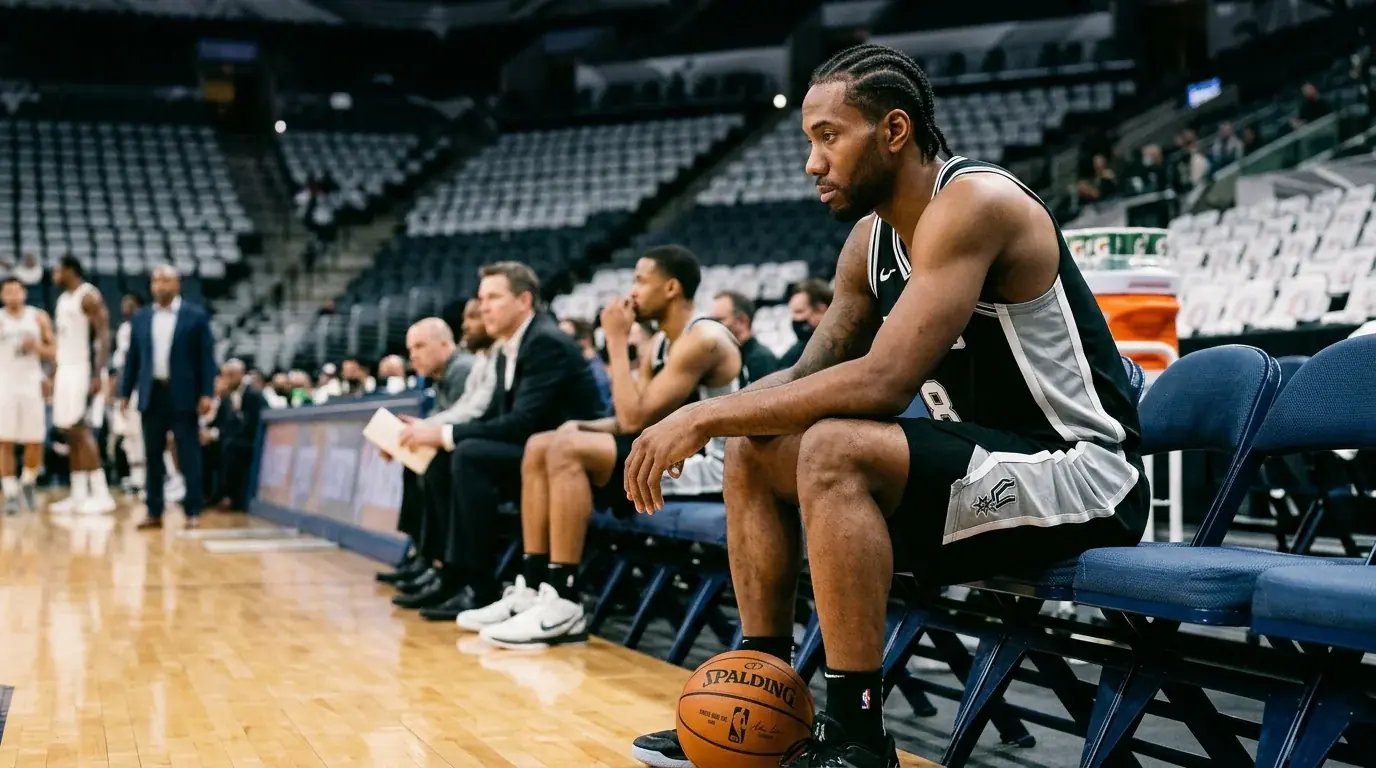
The full timeline began in the early months of 2024. Jontay Porter, a forward then on a two-way-style contract with the Toronto Raptors, became the centre of an integrity investigation after suspicious betting patterns surfaced around his under props in a small handful of games. The pattern that drew attention from the integrity-monitoring firms was not subtle: large bets concentrated on his under markets, far in excess of the typical handle on a marginal NBA player, followed by Porter exiting games unusually early under unclear circumstances.
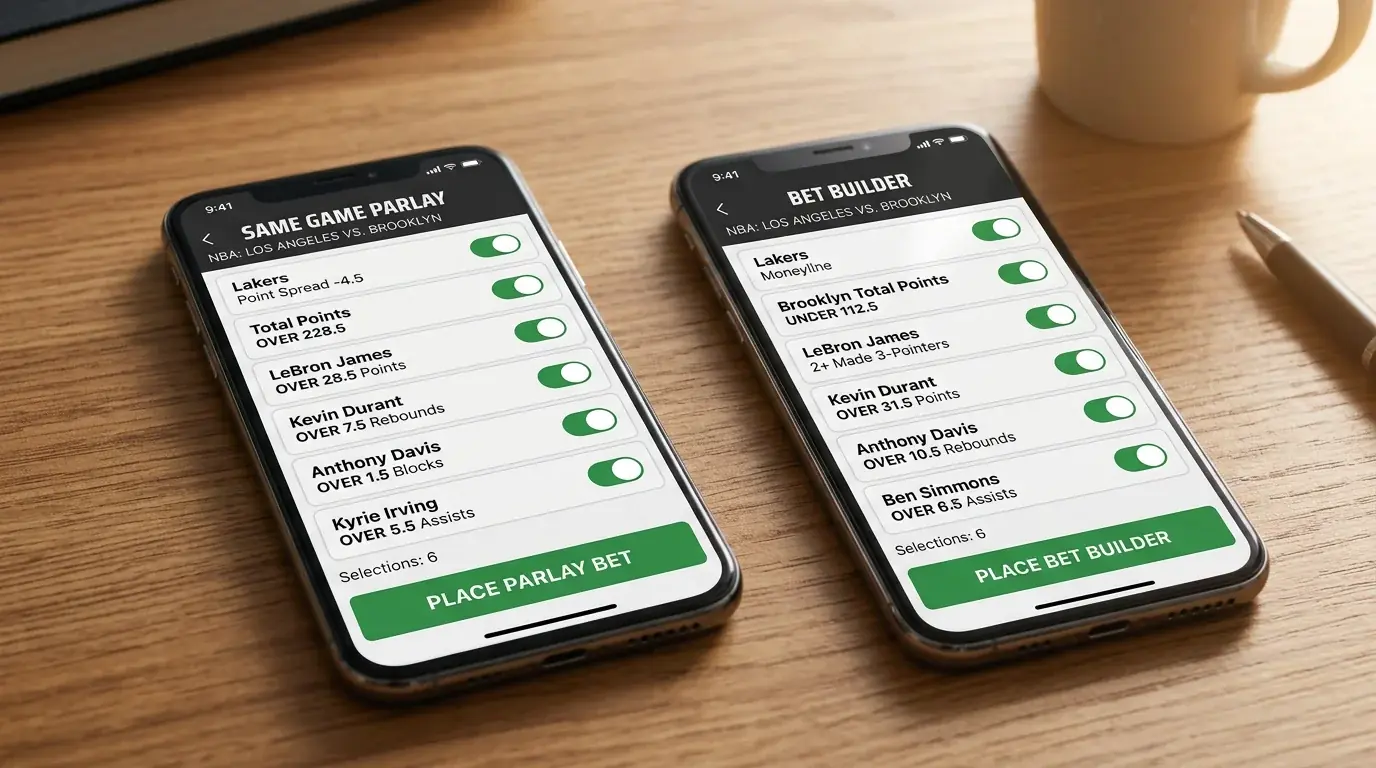
One specific same-game parlay drew the most scrutiny. A bettor staked $80,000 on a same-game parlay combining “under” outcomes on multiple of Porter’s stat lines for a single game. The potential payout on the parlay was approximately $1.1 million. In that game Porter played roughly three minutes before exiting, citing illness or injury depending on which contemporaneous report you read, and the under markets across multiple stat categories all settled as winners.
The integrity firms flagged the parlay almost immediately. Sportsbook compliance teams compared the timing of the bet, the size of the stake, the unusual concentration of unders on a low-profile player, and the on-court behaviour during the relevant game. The pattern was identifiable. Within weeks, the NBA opened a formal investigation, and within roughly two months Porter was banned for life from the league.
Adam Silver issued a public statement framing the decision: “There is nothing more important than protecting the integrity of NBA competition for our fans, our teams and everyone associated with our sport, which is why Jontay Porter’s blatant violations of our gaming rules are being met with the most severe punishment.” Lifetime bans are exceptionally rare in the NBA — Porter became the first player in over four decades to receive one for gambling-related violations.
The federal investigation that followed unwound the network around the bet. The bettor who placed the parlay was not acting alone, and the indictments named multiple individuals coordinating with Porter to extract the prop result. Porter himself was indicted on federal charges, including wire fraud conspiracy related to the betting operation.
The same-game parlay mechanic that made it possible
Why a same-game parlay specifically? The mechanic is what made the operation viable, and understanding it explains a lot about why prop reforms targeted parlays as aggressively as they did.
An $80,000 single-leg under bet on a low-profile player would have raised red flags instantly at any operator’s compliance desk. A bet that size on a single market on a backup forward is implausible on its face — no legitimate punter is staking that volume on a single under prop on a player nobody is researching. The market would have been flagged before the game tipped off, and the bet might have been reduced or refused.
A same-game parlay disguises the size. The $80,000 stake spread across multiple stat lines on the same player creates a parlay structure where each individual leg looks defensible — perhaps not the most sophisticated read, but not obviously suspicious. The combined potential payout balloons because parlays multiply the legs, so the upside on the ticket reaches seven figures even though no single leg’s stake looked operationally extreme on its own. The total exposure to the operator is concentrated on one game and one player, but it is hidden inside a legitimate-looking parlay structure that risk teams might not immediately catch.
The mechanic also exploited a structural blind spot. Same-game parlays now form over 60 per cent of all bets in some US states, and at certain operators up to half of all wagers fall into the prop-bet bucket. The volume of legitimate same-game parlay activity is enormous. A single high-stake parlay in a sea of small recreational ones is hard to surface in real time, even when the integrity firms are working hard at it.
The deeper structural issue: a player on a two-way-style contract is the perfect candidate for under-prop manipulation because his minute base is unstable, his prop limits are low (allowing the bookmaker less surveillance), and his early exit from a game creates plausible deniability for an integrity investigation. Two-way and 10-day contract players became the focal point of the post-Porter reforms for exactly these reasons, and the under-prop removals on those contracts are now a permanent fixture of US sportsbook operations — covered in detail in our breakdown of two-way contract prop bans.
The NBA’s immediate response
The league moved on multiple fronts within weeks of the ban. The first response was punitive: Porter’s lifetime ban, federal cooperation with the prosecution, and full disclosure of the league’s findings to the relevant regulatory bodies. The second was structural: the league worked directly with major US sportsbooks to remove “under” player props on players holding two-way and 10-day contracts ahead of the 2024-25 season. The coordinated removal across FanDuel, DraftKings, BetMGM, ESPN BET and Caesars happened before the first regular-season game tipped off, which is unusually fast for what is essentially a multi-operator coordinated policy change in the US betting market.
The third response was educational. The league deepened its integrity training requirements for players, tightened its rules on player gambling proximity, and reinforced the lifetime-ban consequence for any player found to have manipulated outcomes for betting purposes. None of those measures were entirely new, but the Porter case put them on a different priority footing.
Internally the league also accelerated work on injury-report timing reforms — the kind of changes that would later become formal policy in October 2025 with the mandatory 11:00 to 13:00 game-day reporting window. The Porter case did not directly trigger those reforms, but it did surface the broader information-asymmetry problem that they were designed to solve. Players, agents, team staff and anyone with proximity to game-day decisions had access to information that the public — and the bookmakers — did not, and that asymmetry was exploitable.
The aftermath, two years on
The Porter case set a template for how the NBA, the sportsbooks and the regulators would jointly respond to subsequent prop-related incidents, and that template was tested almost immediately. The October 2025 federal indictments — 34 individuals charged in two coordinated cases — operated within the same framework: integrity firms flagging unusual betting patterns, federal prosecutors building cases on wire fraud and conspiracy charges, and the league responding with public-policy changes calibrated to close the specific vulnerabilities exposed.
For the prop betting industry the longer-term effects have been substantial. Two-way and 10-day contract under-prop removals are now standard. Same-game parlay structures on low-profile players carry tighter limits and more aggressive monitoring. UK operators, while not bound by the US-coordinated decisions, have largely mirrored the under-prop restrictions on two-way players because the trading desks and pricing feeds are shared internationally and because UKGC carries an active interest in market integrity. The American Gaming Association estimated that legal sports betting in the US alone reached nearly $148 billion in handle in 2024, with player props growing from roughly 15 per cent of basketball handle three years earlier to 25 to 30 per cent of basketball handle by 2025 — that scale is what makes any coordinated reform consequential rather than cosmetic.
For the public conversation around prop integrity the Porter case is the inflection point that everything else references. Adam Silver’s continued advocacy for federal-level legislation rather than state-by-state regulation traces back directly to the operational complexity exposed by the Porter investigation, where multiple jurisdictions had to coordinate to build the case. “I wish there was federal legislation rather than state by state,” Silver has said publicly. “We’ve asked some of our partners to pull back some of the prop bets.” That call for unified oversight, two years after the Porter case, remains unresolved at the federal level — but the patchwork of operator-driven reforms it has produced is genuinely substantial.
How much was bet on the parlay tied to Jontay Porter?
A single same-game parlay was staked at $80,000 with a potential payout of approximately $1.1 million. The parlay combined under outcomes on multiple of Porter’s stat lines for one game, and Porter played roughly three minutes in that game before exiting under unclear circumstances. The bet’s size and structure drew immediate attention from integrity-monitoring firms.
What was Porter’s lifetime ban based on?
The lifetime ban was issued by the NBA for what Adam Silver described as blatant violations of the league’s gaming rules, including manipulation of game outcomes for betting purposes. Porter was the first player in over four decades to receive a lifetime ban for gambling-related violations, and a parallel federal indictment followed on wire fraud conspiracy charges.
Prepared by the nba Best Player Prop Bets editorial staff.