NCAA Prop-Bet Bans — Why College Basketball Is Off the Menu in More States
 Available in US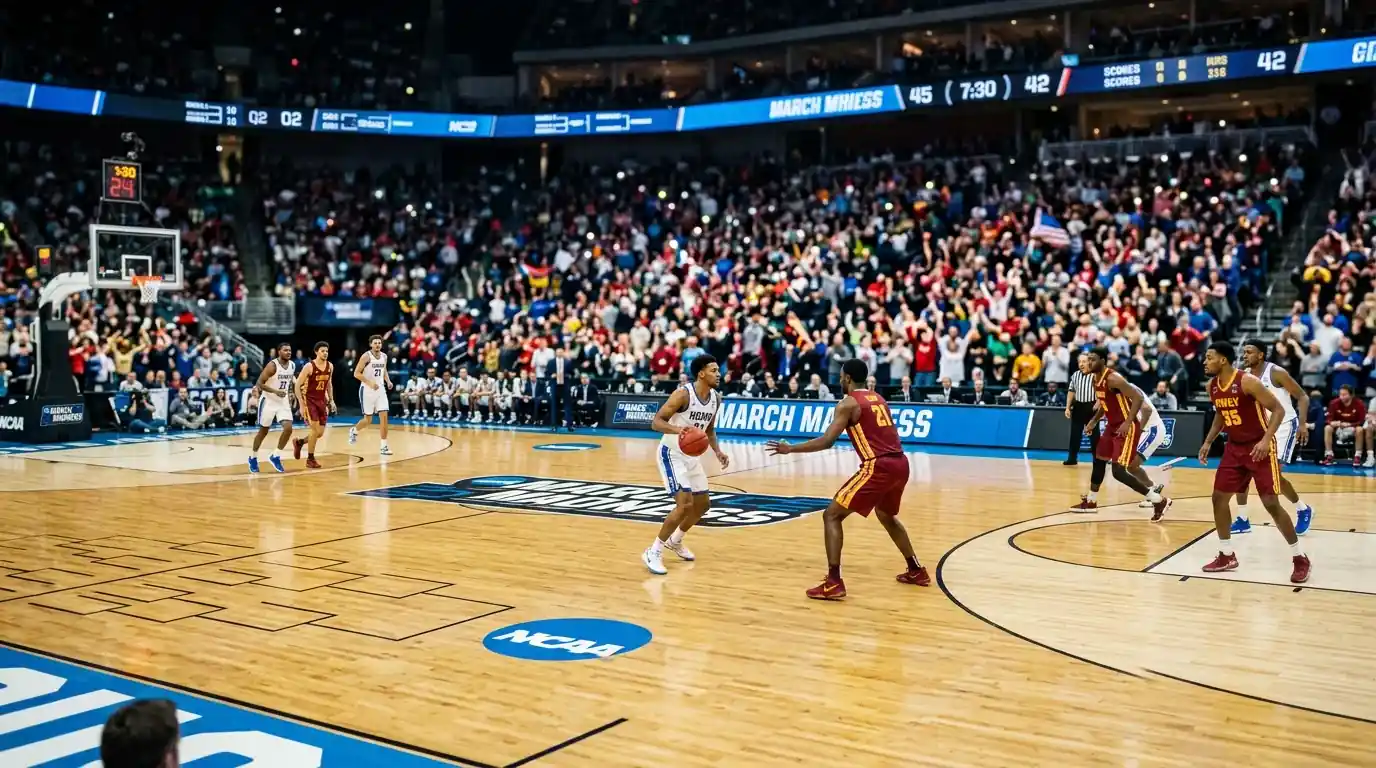
Every March I get a wave of messages from UK punters asking why their usual operator does not list player props for the NCAA Tournament. The answer is not that the bookmaker forgot to load them. The answer is that an entire layer of US state-level regulation has been quietly building for the better part of three years, and the American college basketball prop landscape now looks fundamentally different from where it was in 2023. Reading the NCAA picture matters for UK punters not because we expect to bet college props frequently, but because the regulatory dynamics there are the early signal for the integrity conversations that will eventually shape NBA prop policy on both sides of the Atlantic.
March Madness handle and the scale of the prop conversation
The NCAA Tournament has become one of the largest single betting events in the US calendar. The American Gaming Association estimated that betting on the men’s and women’s tournaments combined reached $3.3 billion in handle in 2024, a number that has grown year on year as legal sports betting has expanded across more US states. That scale is what made the prop conversation around college basketball urgent rather than incremental.
The structural difference between college and professional props matters here. NBA players are full-time professional athletes with established support infrastructure, mental health resources and, increasingly, formal protections under the NBPA’s player welfare framework. College basketball players are students, often 18 to 22 years old, with much less established infrastructure for handling the harassment that prop betting drives. When a bettor loses a parlay because a college player missed an over by half a point, the player who absorbs that disappointment is typically a teenager studying for midterms.
The size of the prop market relative to the sophistication of the player base created an obvious vulnerability. NCAA leadership recognised it, and the response has shaped NCAA prop policy across multiple jurisdictions over the past three years.
The state ban patchwork — what has happened and where
The US prop ban landscape is genuinely a patchwork rather than a coordinated policy. Each US state operates its own gambling regulator, and decisions on which markets are available — including whether college player props are offered at all — sit at the state level rather than the federal level.
The trend across the past three years has been toward more states banning college prop bets. The mechanism varies. Some states have implemented blanket bans on all NCAA player props. Others have banned props on in-state colleges only, allowing props on out-of-state schools to remain. Others have banned prop categories that the NCAA specifically flagged as harassment-prone — typically under-side bets and individual stat lines — while permitting more aggregated markets like total team points or game outcomes.
The political pressure for these bans came in significant part from the NCAA itself. Charlie Baker, the NCAA’s president and a former state governor, has been one of the most consistently vocal advocates for tightening the regulatory environment around college props. “Sports betting issues are on the rise across the country, with prop bets continuing to threaten the integrity and competition, and leading to student-athletes and professional athletes getting harassed,” Baker said in a public statement that became foundational to the NCAA’s lobbying effort. “The NCAA has been working with states to deal with these threats, and many are responding by banning college prop bets.”
The lobbying has been effective. By the start of 2026 a clear majority of US states with regulated sports betting had implemented some form of restriction on college player props, with the strictest jurisdictions banning the entire category and others restricting specific market types. The trend remains toward more restrictions rather than fewer.
The NCAA SNAP survey and what the data shows
The empirical case for the bans came largely from the NCAA’s own research. The Student-Athlete Needs, Aspirations and Perspectives Survey — known as SNAP — collected data from over 20,000 college athletes on their experiences with sports betting, harassment and related concerns. The results were striking.
51 per cent of Division I men’s basketball players reported social media abuse tied to their athletic performance — abuse that the survey directly linked to sports betting outcomes in a substantial share of cases. Nearly 60 per cent of college basketball players said sports gambling contributes to “unfair public scrutiny” of their performance. Roughly 1 in 3 men’s basketball players reported direct accusations from fans tied to those fans’ betting losses.
The survey also captured the qualitative experiences underneath the headline numbers. Players described receiving threats, derogatory messages, and accusations of game-fixing after performances that fell short of prop expectations. The pattern was consistent across schools, conferences and player profiles — anyone whose name appeared on a prop slip became a potential target, and the higher the player’s profile, the more concentrated the abuse.
Baker articulated the welfare framing in a separate statement: “This time of year can be magical for so many players, but it also can quickly become a nightmare due to abuse from fans engaging in sports betting. The NCAA is actively working to protect college athletes by monitoring abuse through our collaborations with Signify and Venmo. But sportsbooks and regulators in some states can do more now by eliminating the prop bets we know are leading to harassment.” The combination of survey data and direct advocacy created the political conditions for the state-level bans that followed.
The American Gaming Association — the trade body representing US sportsbooks — has been more cautious in supporting outright bans, with one spokesperson framing the operator side’s preference: “Prohibition doesn’t stop betting — it stops oversight.” That position carries weight in the broader debate, and it has slowed the spread of bans in some jurisdictions where the AGA’s lobbying has been effective. But the trend at the state level has continued in the direction of restrictions, with regulators generally siding with the NCAA’s welfare framing over the operator framing on this specific category.
What the UK perspective looks like
For UK punters the NCAA prop landscape matters in two practical ways. First, it shapes what is available on UKGC-licensed bookmakers when March Madness arrives. UK operators are not bound by US state regulations, but their relationships with US-listing data providers and integrity firms mean that markets which are restricted across many US states tend to appear thinner on UK menus too. Some UK operators offer NCAA player props during the tournament; others do not. Coverage varies, and it varies in ways that often track the underlying integrity concerns rather than commercial calculations.
Second, the NCAA dynamics are a leading indicator for NBA policy. The same arguments — player welfare, harassment risk, integrity vulnerability on individual stat lines — are being made about NBA props with the support of the NBPA and the league office. The NCAA bans show one possible trajectory: state-by-state restrictions accumulating into a de facto blanket policy. If the NBA prop conversation continues along the same lines, UK punters can expect the available menu of NBA player props to continue shrinking on the niche end, with the standardised major-star markets remaining available but the marginal categories increasingly absent. The structural reasoning behind those operator-side adjustments is detailed in our breakdown of two-way contract prop bans.
The third UK consideration is responsible gambling messaging. The UK has its own infrastructure of harm-reduction research and policy through GambleAware and the Gambling Commission, and the questions raised by the NCAA experience — about harassment as a downstream consequence of betting volume on individual people — apply to UK punters even when they are betting professional sports rather than college sports. The framing is the same regardless of jurisdiction: more prop volume on more individual people creates more surface for harm, and the regulatory response in the UK and the US has been moving in the same direction even though the legal mechanisms differ.
The American Gaming Association has continued to argue that legal regulated markets are preferable to unregulated alternatives — “Prohibition doesn’t stop betting — it stops oversight” — and that argument has merit when applied to outright market bans. The harder question, which the NCAA experience has surfaced and which the NBA conversation is now grappling with, is whether specific market categories carry harm profiles that justify restriction even within a legal regulated framework. The answer in college basketball has been a clear yes, across enough jurisdictions to constitute a policy trend rather than an outlier.
Are NCAA props available on UK bookmakers?
Some UKGC-licensed operators offer NCAA player props during the tournament window, but coverage is significantly thinner than NBA player prop coverage and varies by operator. Many UK books restrict college props voluntarily, mirroring the integrity concerns that have driven US state-level bans, even though UK regulators do not require the restrictions.
How many US states have banned college props as of 2026?
A clear majority of US states with regulated sports betting have implemented some form of restriction on college player props by the start of 2026, with the strictest banning the entire category and others restricting specific market types or in-state schools only. The exact count shifts as state regulators continue to revise their policies, and the trend has been toward more restrictions rather than fewer.
Written by the editors at nba Best Player Prop Bets.